Broken link building. It sounds brilliant in theory. That’s why there are hundreds of articles and guides on the process. Find dead links, offer your site as a replacement. The recipients of your pitch will see so much immediate value in swapping out a 404’d link with a link to your working site, they’ll all update their pages immediately; the conversion rate on this outreach will be off the charts.
In practice, it rarely works this way. Actually, the conversions on this style of linkbuilding aren’t typically any better than simply finding relevant pages to pitch your link to without the broken link strategy.
There’s a few reasons for this:
- Webpages tend to die of old age. This means that the page linking to them is likely also old and therefor not being updated any longer.
- Other linkbuilders have beaten you to it by now. If you’re in a competitive niche, the probability that someone else has found and outreached these targets is high. You’re digging through the literal garbage.
- These pitches are extremely easy to automate. If a site hasn’t received emails about the the particular link you’re reaching out to them about, it’s still likely they’ve received a pitch regarding a different dead link, and most of these emails are painfully the same.
- You don’t know the original intent behind that link. I mean, if it’s a piece of content, you can throw it into wayback machine and recreate it or even create a superior resource; if it’s a home page link, your service might genuinely be a better offering. These things will certainly improve your odds on a case by case basis but they don’t change the fact that links are created for a purpose and your site wasn’t part of that original purpose. And honestly if you’re able to sell your link to them under these circumstances, it’s likely they would have seen value in your link regardless of the broken link pitch.
- If the original link is now dead, what assurance do they have that yours wont eventually also die?
- They just don’t care.
- They don’t have edit privileges, whoever wrote it no longer works there, etc.
- They’ll simply say “thank you for letting me know, I’ve removed the broken link.” This is by far the most common, if you receive a reply at all. Sometimes they delete the page entirely (refer to the first bullet).
The list goes on.
So in addition to needing to “sell” your link in the same way you would any other link pitch, you also have to sell them on the mere idea that there’s any value in fixing that broken link. You’ve now created multiple barriers out of what once sounded like a brilliant strategy.
Most people who would replace a dead link with your link because of a cold email likely would have linked to you if you had simply asked them to anyways.
This doesn’t mean broken linkbuilding is a bad idea. Personally, I think even if something has a bad conversion rate it can still be worth doing. If your goal is to secure more links, then you should do more things to secure links.
However, the way most linkbuilders and nearly every guide on the topic tackle broken linkbuilding is flawed for all of the reasons I’ve outlined above and more.
I just took a break from writing this to read through all of the guides currently ranking on the first page for “broken link building” and all of them describe the exact approach of “find a broken link, offer yours as a replacement” and offer little more. Mostly they’re tutorials on how to find broken links, which maybe I should write about too but this is about the outreach. Brian Dean’s guide sort of goes into the first of my following tips but I can tell immediately that the example he gives of how to implement it will still fail the majority of the time - which is likely why his screenshot didn’t include a reply from the recipient.
Here are some things to try instead. These will all improve your broken link building efforts but they work even better when you can combine two or more of them at once:
Find a page on the same site to replace the dead link
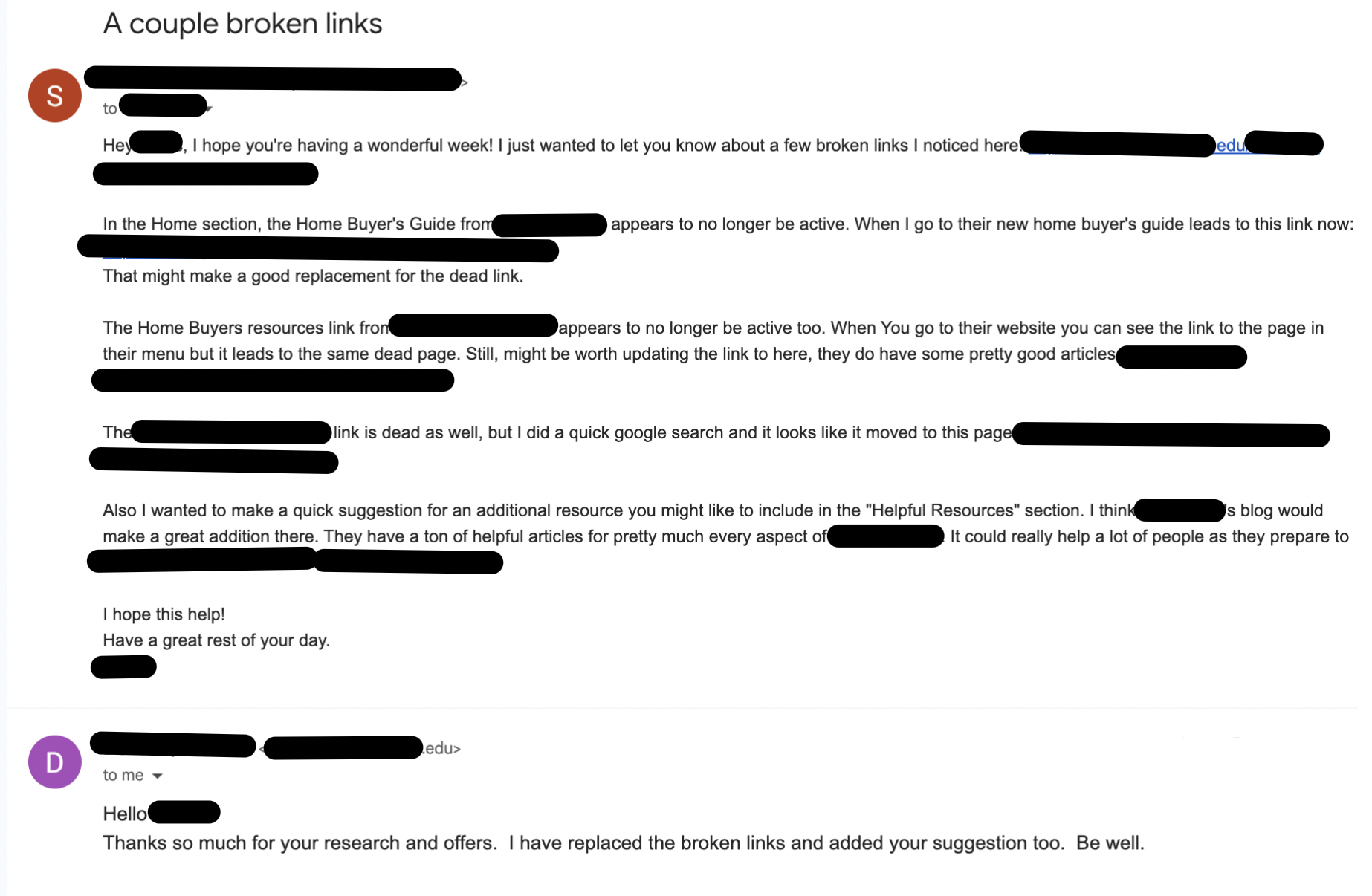
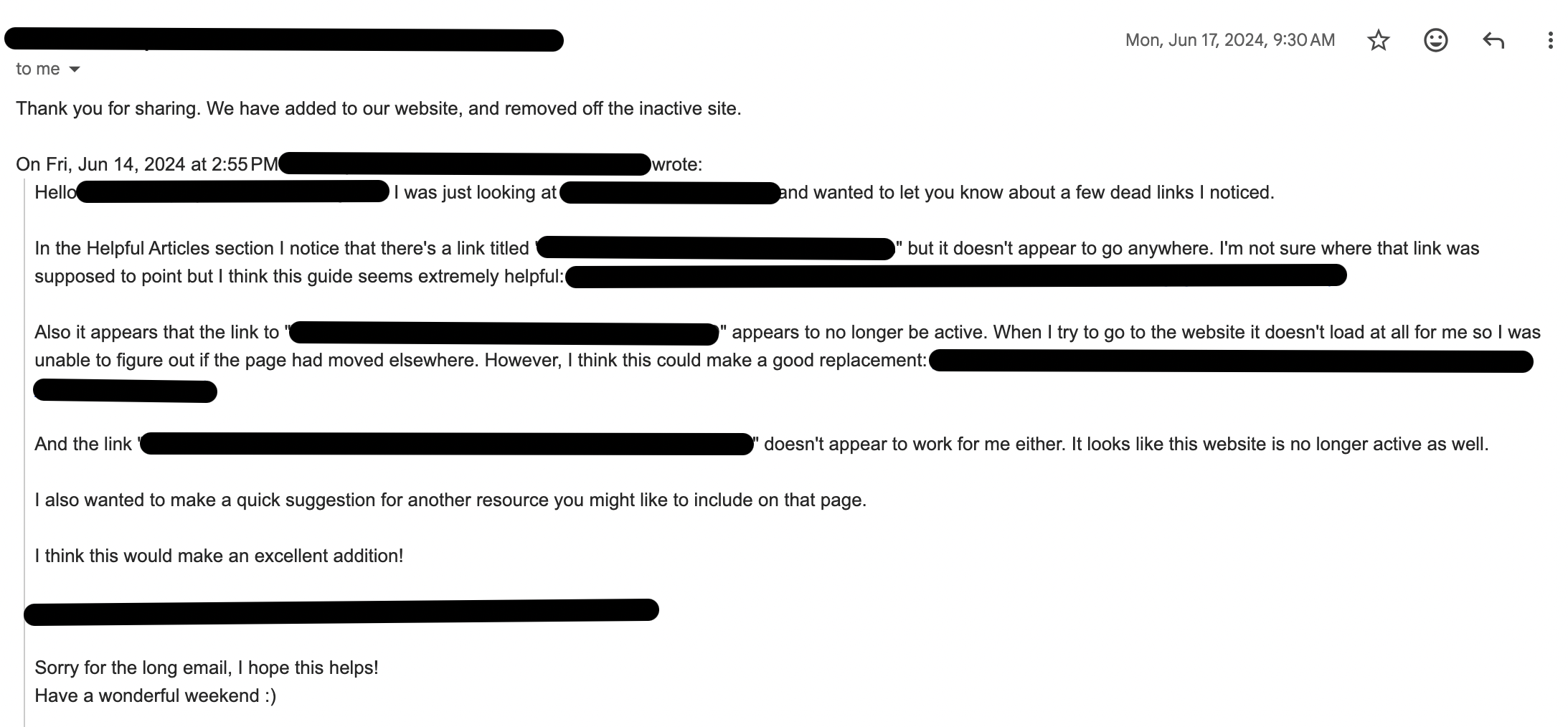
In cases where a link is dead or broken but the website still exists, if you can find a replacement for that link that exists at the same website your suggestion becomes immediately helpful rather than simply using a dead resource to promote your own. It shows you’re not just automating* pitches, you’re putting in real effort to solve an issue for them. Here you can see this approach helped me land a great .edu link less than 2 hours after my email was sent.
*Even though you can totally still automate emails like this.
Let them know about multiple broken links
As in my previous screenshot, letting them know about multiple broken links can create a sense of urgency to fix them. It shows you’ve actually looked at the page and comes off much more helpful than simply asking someone to replace a singular broken link with yours. Also try letting them know about broken links on different pages of their site.
Find a broken link on a different page than the one you want a link on
If you’ve found a link opportunity it can be a good idea to search their site for any broken links you can also mention in your outreach. This also helps to make your outreach appear more personalized (even though you can easily automate this as well) by showing that you’re actually browsing their website. Another benefit to this one is it doesn’t have to be a broken external link. You can find broken internal links or other issues with their website that you can help them fix, or something like maybe the link to their Facebook profile in the footer doesn’t work. There are a lot of ways you can play this one and the best part is almost every website will have an issue you can report to them.
Find adjacent resources
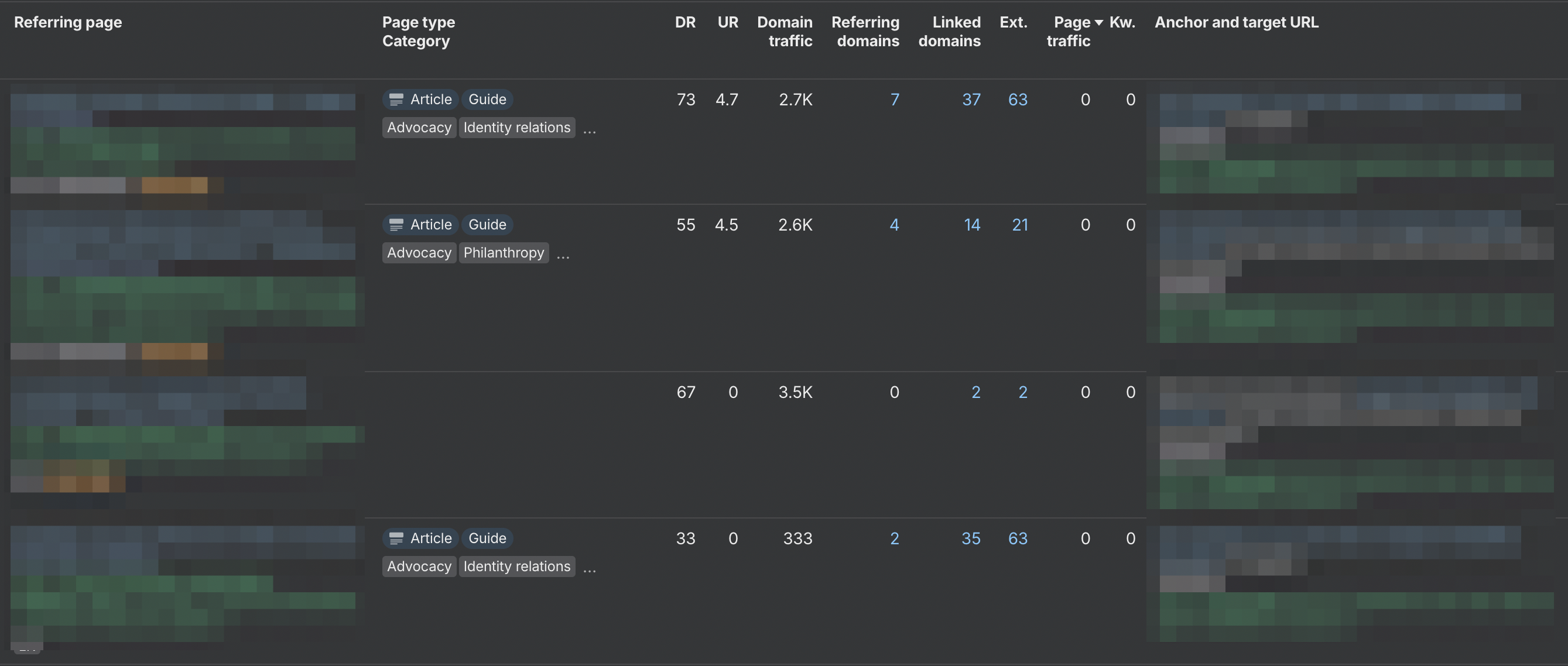
This is also exemplified in my first screenshot. Instead of searching for resources that yours can be an exact replacement to, search for ones that have an intersecting relevance. For example, if you’re trying to build links to an article about home safety for senior citizens, you may search for a dead resource about disability accommodations, find a replacement for that dead disability accommodations website and then pitch your resource alongside it. You can search manually by Googling things like “disability accommodations guide inurl
”* but personally I like to let these opportunities find me. While you’re doing your regular link prospecting, keep an eye out for dead links that are adjacent topics to yours and you’re bound to discover great opportunities.*I just Googled that exact phrase, checked for broken links on one of the first pages that stood out to me and found 4 great targets in about 20 seconds:
Offer someone else’s resource as a replacement
If you come across a dead link and aren’t able to find a suitable replacement for that resource at the same website, instead of offering yours as a direct replacement you could consider finding someone else’s to send. I like to do a quick Google search for whatever the title of the dead resource was and send them the best non-commercial site or one that isn’t from a direct competitor. Then after you’ve made that recommendation you can also include one of your own and suggest they add it as well.
Find dead resources from highly authoritative sources and fix them
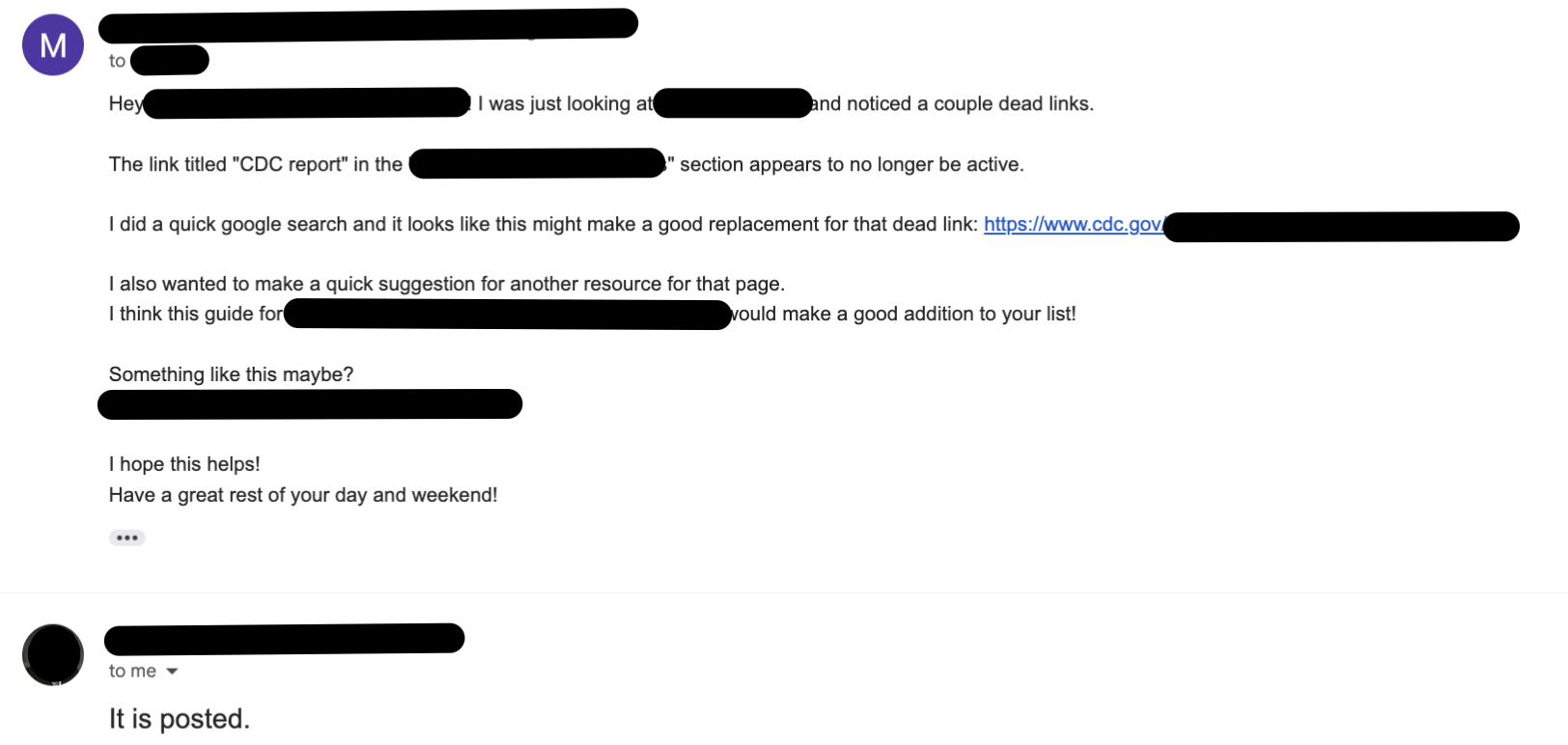
Find dead links from places like non-profits or government agencies that pertain to your niche and then find resources at those same sites to fix them with. Simply take a site, in this case it was the CDC website, throw it into Ahrefs’ Best By Links and filter for 404s, then you can just search through the URLs for keywords pertaining to your link. Then it’s just a matter of finding a resource to replace it with. Start with the title of whatever the broken resource was and a site: search. If you can’t find a good replacement, you can also send them an archive.org cache of that page. I’m pretty sure in this particular example the guy would have added my link without the broken link pitch (again, most people who would replace a dead link with your link because of a cold email likely are likely to link to you regardless), but this is also an effective way of finding targets you might not find through other means - this one would have never been on my radar otherwise.
Mention the broken link in a followup
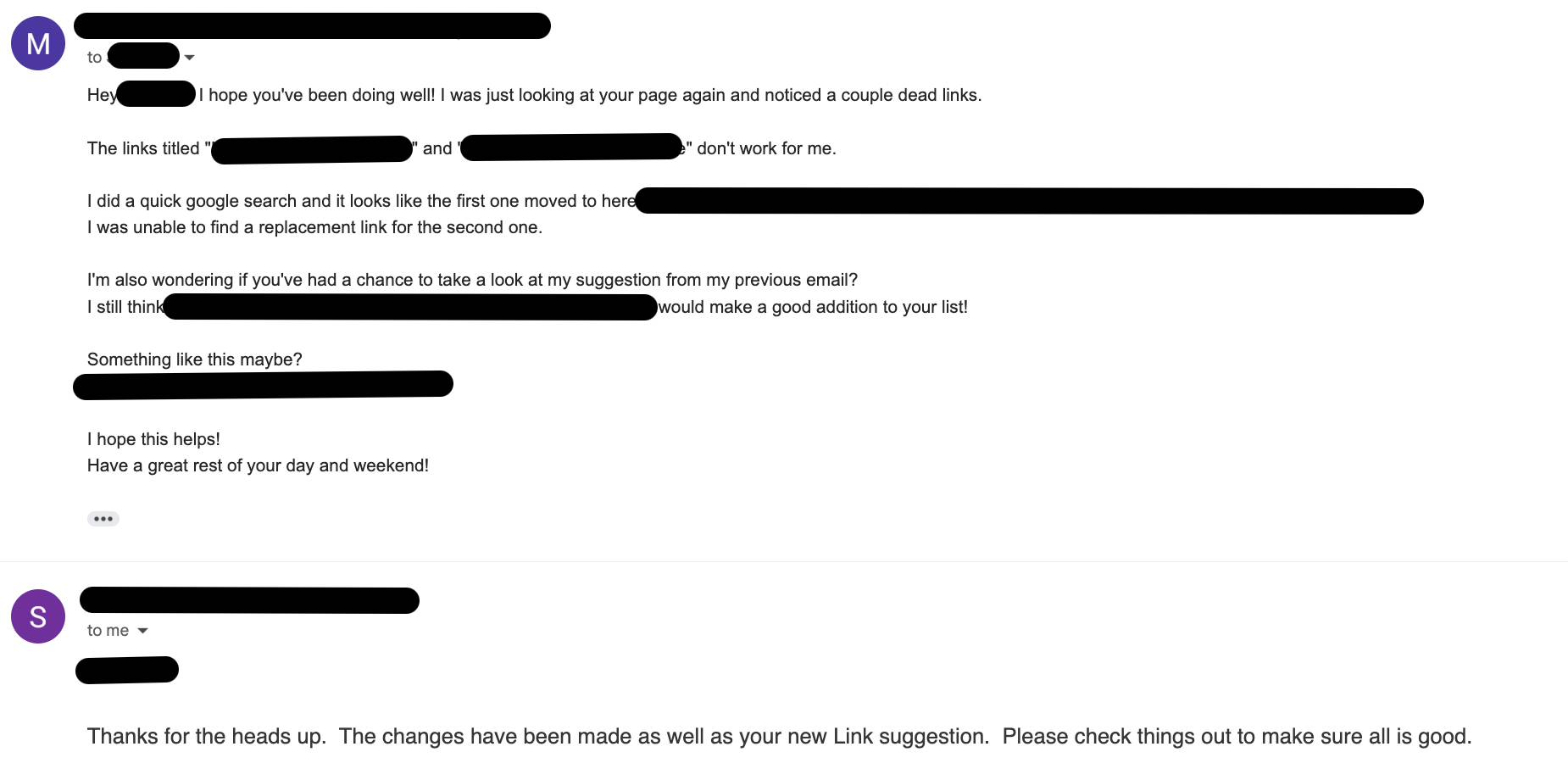
If you’ve already emailed someone your link request and haven’t received a reply, letting them know about a broken link on their website can be a great way to try to get the conversation going with them without sending them a bland followup email and it also shows that you’re a real person actively looking at their site. You can also easily schedule things like this as your followup email.
Mention the broken link after you’ve pitched your link
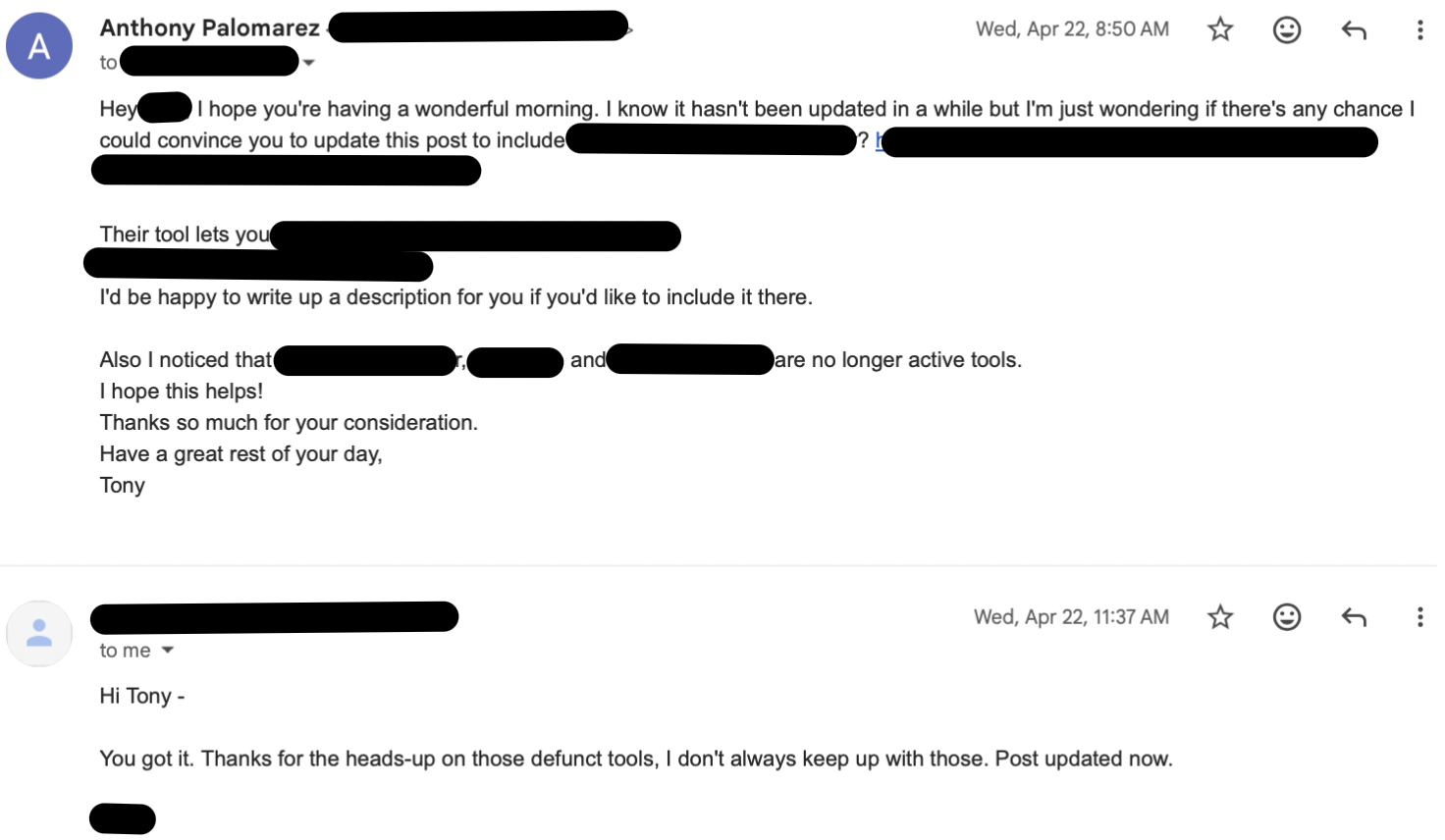
Instead of beginning the email by mentioning the broken link (like I’d guess nearly all other broken link emails do), mention the broken links at the end of the email. This will allow your actual pitch to take precedence in the email as well as demonstrates that you’re not trying to hide your request under a guise of helpfulness. This approach shows that you’re self aware in what you’re asking and also respectful of their time. Then, once you’ve made your pitch you can say “by the way, I noticed…”. I’d also guess that most broken linkbuilding email titles contain the words “broken link” in the subject. This email’s subject was literally just the name of the tool I was sharing with the recipient. I like this approach because it puts my resource out front and at the end gives them an extra reason to open up their website to make the edit.
Send a broken link to someone who has given you a link before
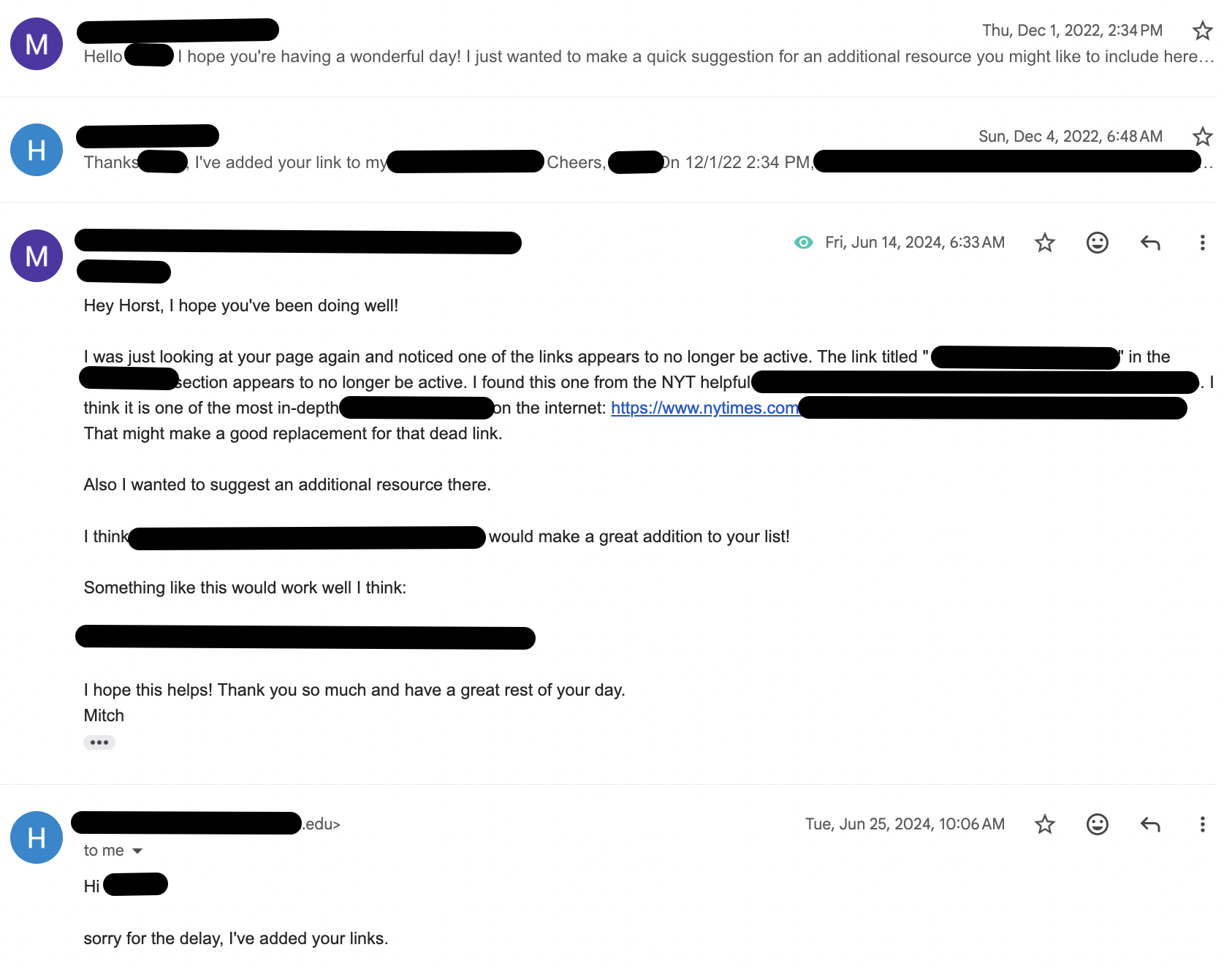
If someone has given you a link in the past and you have another link that you’d like them to add, letting them know of any broken links they have can be a great way to rekindle a conversation with them and an easy way to bring up an additional link you think they’d be interested in. If someone has been kind enough to link to you in the past, it can feel rude to reach back out to them saying essentially “can you add this one too?” without giving them anything in return.
Here’s on I rekindled from a year and half prior. (.edu link btw).
Redirects are better than 404s in a lot of cases
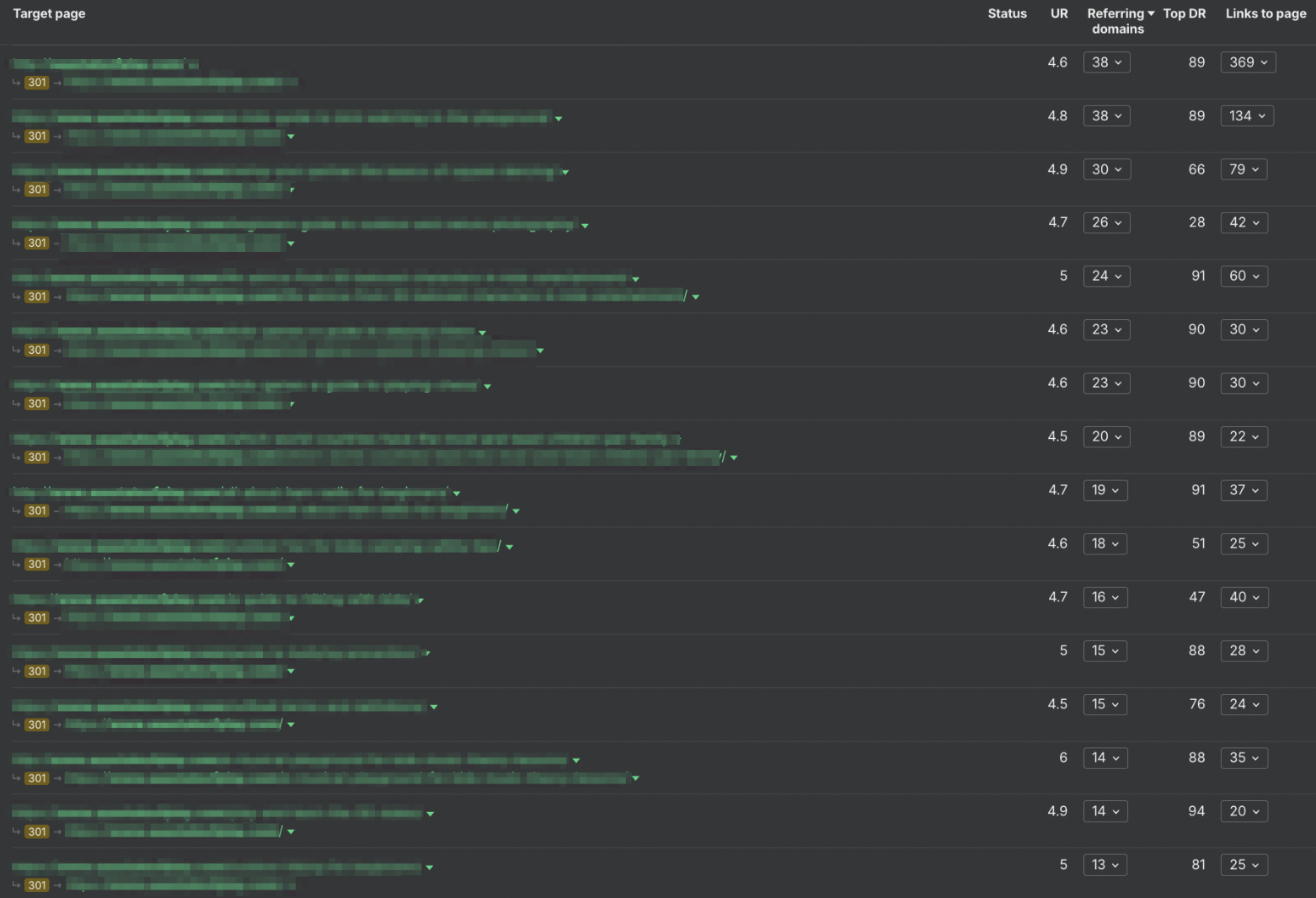
I like to find 301s for my “broken link building” and I find it to work much better than 404s in a lot of cases. Sometimes this is due to the age thing I mentioned early in the article (a link to a more recent blog post that now redirects to the site’s home page is often less ancient than a link to a site that is now completely dead) but mostly I think it’s because this approach is extremely overlooked. Most linkbuilders doing broken link building are looking mostly for 404s so this opens up a lot of opportunity. Throw any site into Ahrefs, go to Best By Links and filter for 3xx status codes. Look for ones that redirect from blog posts to the home page or even the main blog page. Here’s one site I found that has hundreds of links redirecting from various blog posts back to their home page.