Notes: before I get into this I just want to say I've anonymized the hell out of the following screenshots in order to 1) keep this and future tests clean by not revealing too much about the exact site and 2) this worked so well I don't want to just give away the backlink profile I built for free. I realize this makes the images more ugly and maybe less believable but SEOs are constantly believing much more farfetched claims than "directory links good. anchor text great." based on way less evidence. So if you have a problem with me striking out parts of the screenshots, I think you'll live. It's not like any of these things would have been hard to fake anyways.
Now…
I previously wrote about how I built two identical websites for a real business, blocked one site from Google and one from LLMs, and how quickly I was able to get LLMs to surface and recommend the non-Google-indexed site by building a handful of links and local citations to it.
Another test I wanted to run with one of these sites was to see how quickly I could get the Google-indexed version of the site to rank for a keyword that isn’t mentioned on the website anywhere exclusively using backlinks and exact match anchor text.
To give a quick recap of the site I’m working with: I built an extremely barebones website for an established business which has been operating for over 15 years but has never had a website. This is a home and autoglass service business in a small town of about 30,000 people whose primary web presence is a Facebook page, Google Business profile as well as a lesser-used Instagram profile.
There were some parts of this that were a little tricky because although they had never had a website, they do have a significant local presence as well as the most reviews of any similar business in town so I needed to be careful to pick a keyword that was simultaneously relevant to their business but not something that gets mentioned alongside their brand frequently. I wanted to be sure that the links, specifically the anchor texts, I’m building were moving the needle and not Google simply entity matching with relevant terms mentioned elsewhere around the web. In other words, how could I be sure the anchor text was driving anything and not the domain simply gaining more authority and in turn ranking for terms that other pages related to the business, such as their Facebook page, also rank for?
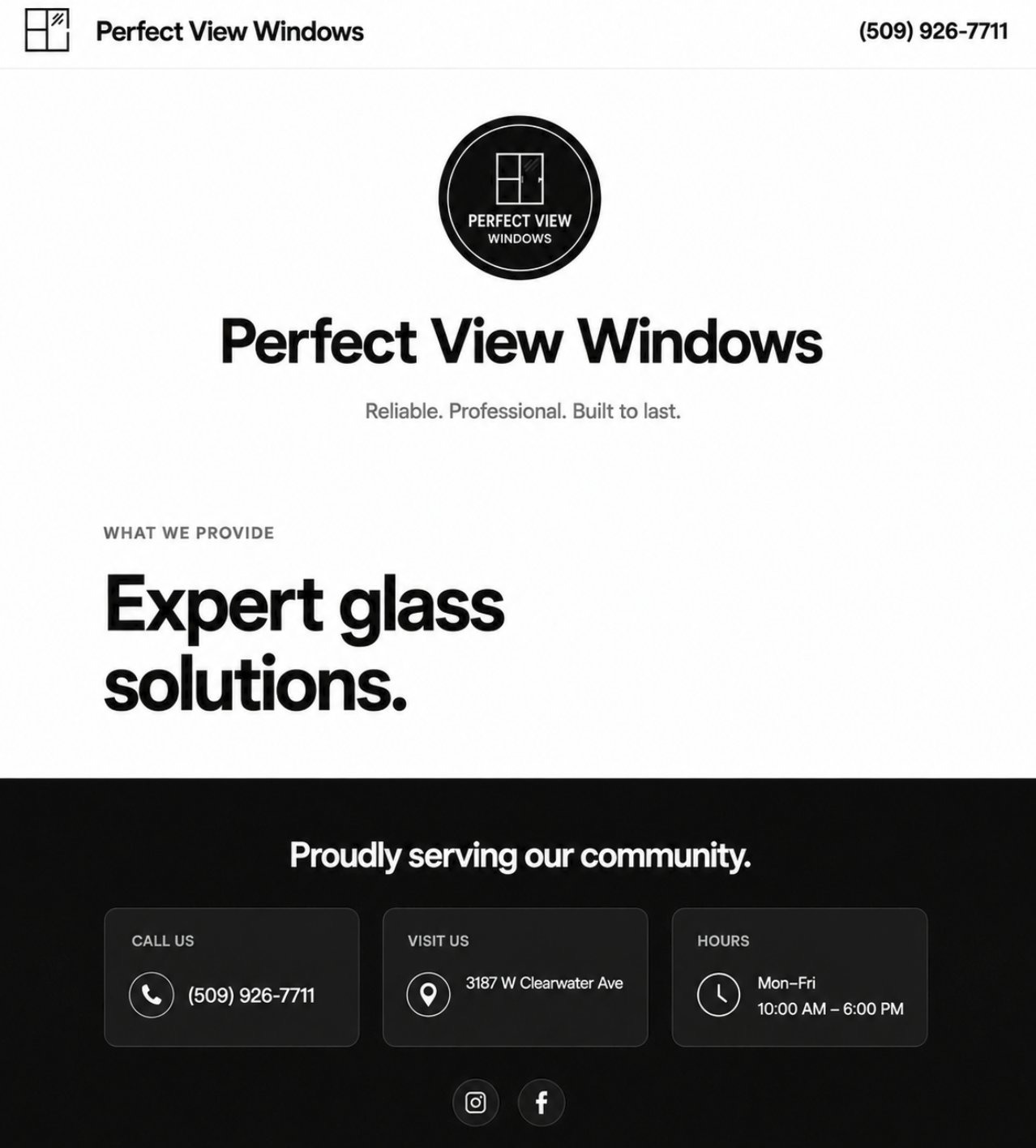
To give a better idea of what the site looks like and how minimal it is, here’s a preview I generated with chatgpt. This screenshot isn’t an image of the exact site, all of the text on it has been changed slightly but this is more or less how the site looks. The real one is a different brand, tagline, address etc.
Essentially, it’s a brand name, phone number, a short sentence about the services provided and a tagline. Notice even the city and state are omitted from the address.
I originally wanted to make it even more minimal but I decided to build somewhat of a real site just in case any real customers happen to land on it. It is my cousin’s real business after all (and he doesn’t know about my little experiment and I want to remain in his good graces when he eventually finds out about this and I have to hand this site over to him lol)
The term I settled on targeting was “rock chip repair [city, state]” since none of those words (again not even the city and state) appear on the site and I knew from past link projects that I could quickly build some relevant links from auto service directories with this term.
So that’s what I set out to do. Well, not strictly auto industry directories, but also some local directories and (mostly) high authority general business directories.
For this test I wanted to stick with directories for a few reasons:
- People insist that directories have no value. Which is true to an extent, but that’s mostly because those people don’t know what they’re doing. If you’re spamming shitty directories, yeah, it’s likely not doing anything or even actively harming your site. But if you’re taking the time to find relevant niche directories they can be just as valuable as any other link, especially on moderated and trusted high authority sites.
- I wanted to test the effectiveness of directory links in isolation of other onsite variables. If there’s no content on the site, can these links do anything to improve positions for phrases that aren’t even alluded to on the page? You’d expect contextual links in a blog post or news story or whatever to be able to do this, but directory listings?
- I wanted to test their effectiveness in isolation of other types of links. How well can I move the needle with only directories?
- I can directly control many aspects of the link, including most importantly the anchor text but also the surrounding text and other aspects like which category I put the listing in. Some of them I can even control the URL.
- I can build more of them in a shorter amount of time. Honestly this is the main factor. If I could have quickly and reliably built enough backlinks with exact match anchor texts through manual outreach to “real sites” I would have but it doesn’t work that way.
- (Good) Directories are good.
I put together a doc of the links I built for this project and sorted them roughly in order of which links I personally think have the most value.
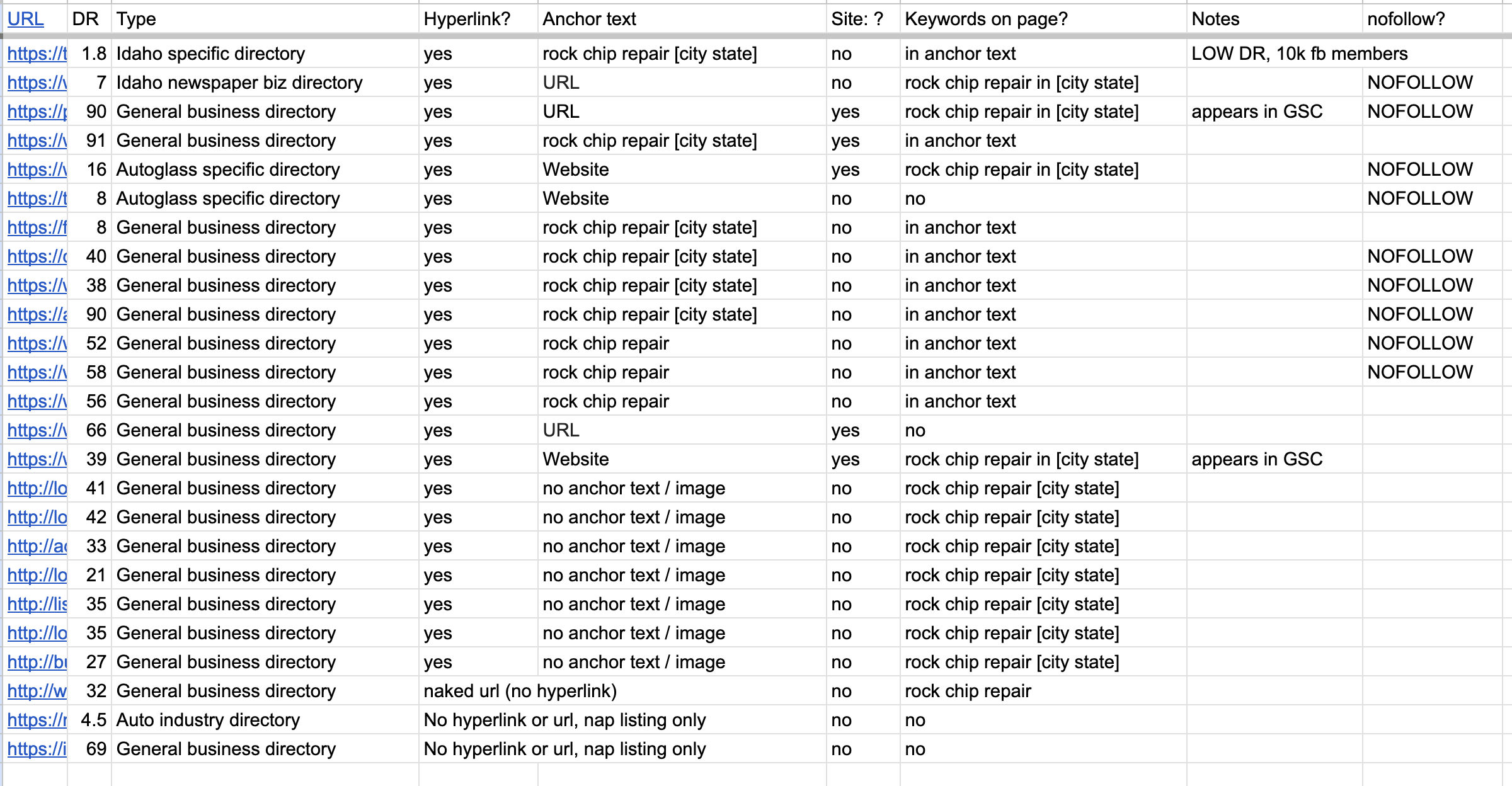
Funny enough I didn’t check to see which were nofollow until after I had finished sorting them based on which I felt had the most value, so it was amusing to me to see all of the nofollow links towards the top. Interestingly, two of the lowest DR ones are are ones that I personally feel are among the most valuable. These two in particular are: 1) a local community website that lists businesses and has an active facebook group with over 10,000 members, 2) an Idaho county newspaper’s business directory.
Following these, there are a couple high authority, well trafficked business directories, one of which I could control the anchor text on. Then a couple autoglass specific business directories and then some other various general business directories, many of which I was able to get exact match anchor text from.
When we start to hone in on the “best” links in this list, there’s one link that really seems to stand out from all of the others. They’re all good links in my opinion, or I wouldn’t have built them, but this one in particular hits a couple good marks.
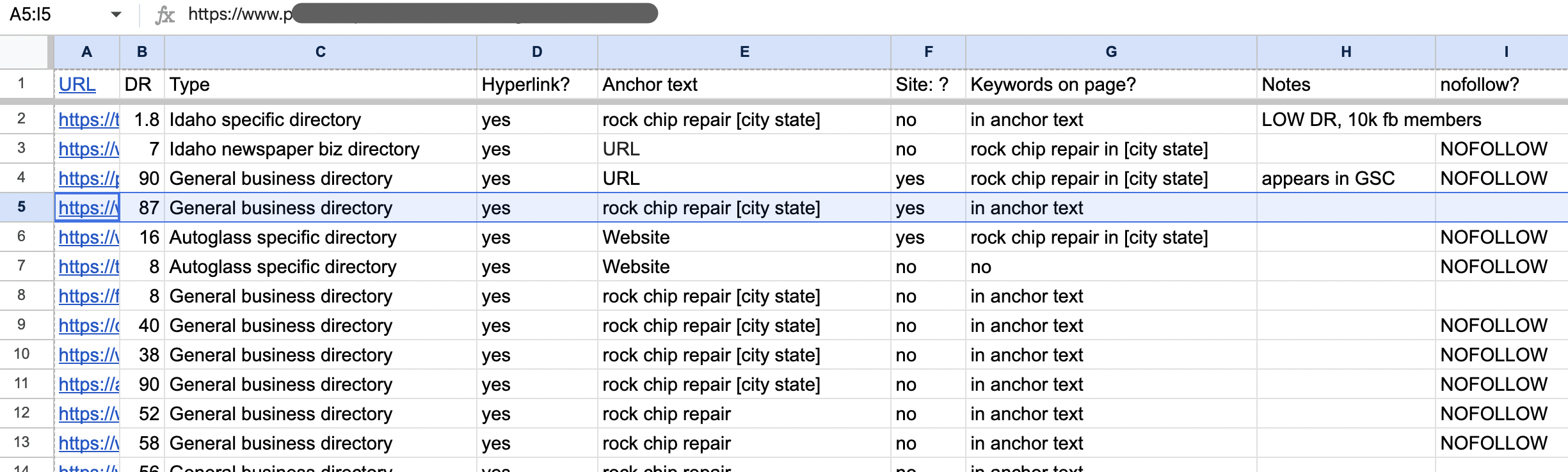
- exact match anchor text
- high DR
- not nofollow
- (this doesn’t matter but some people think it does) the link appears in google for a site search.
None of the other links check all of these boxes, although two other links hit points 1 and 3. I’m resisting the urge to turn this into a rant about how these metrics don’t really matter that much but, still, as SEOs we like to rank things so I guess there has to be one “best” link.
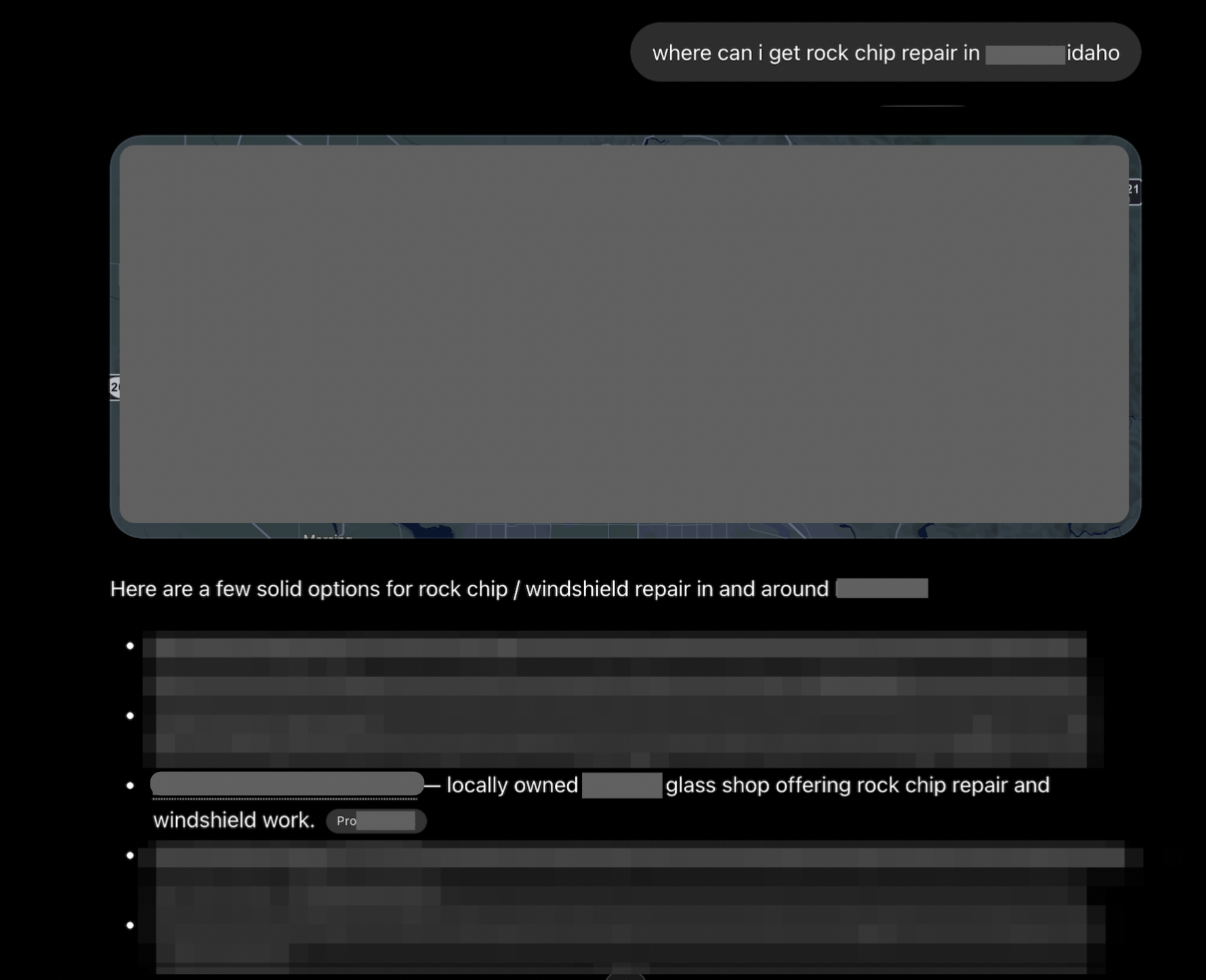
Is that link responsible for all of the performance boost we’re getting from this effort? I don’t know, but interestingly this is also the link that gets referenced when I ask chatgpt about rock chip repair in [city].
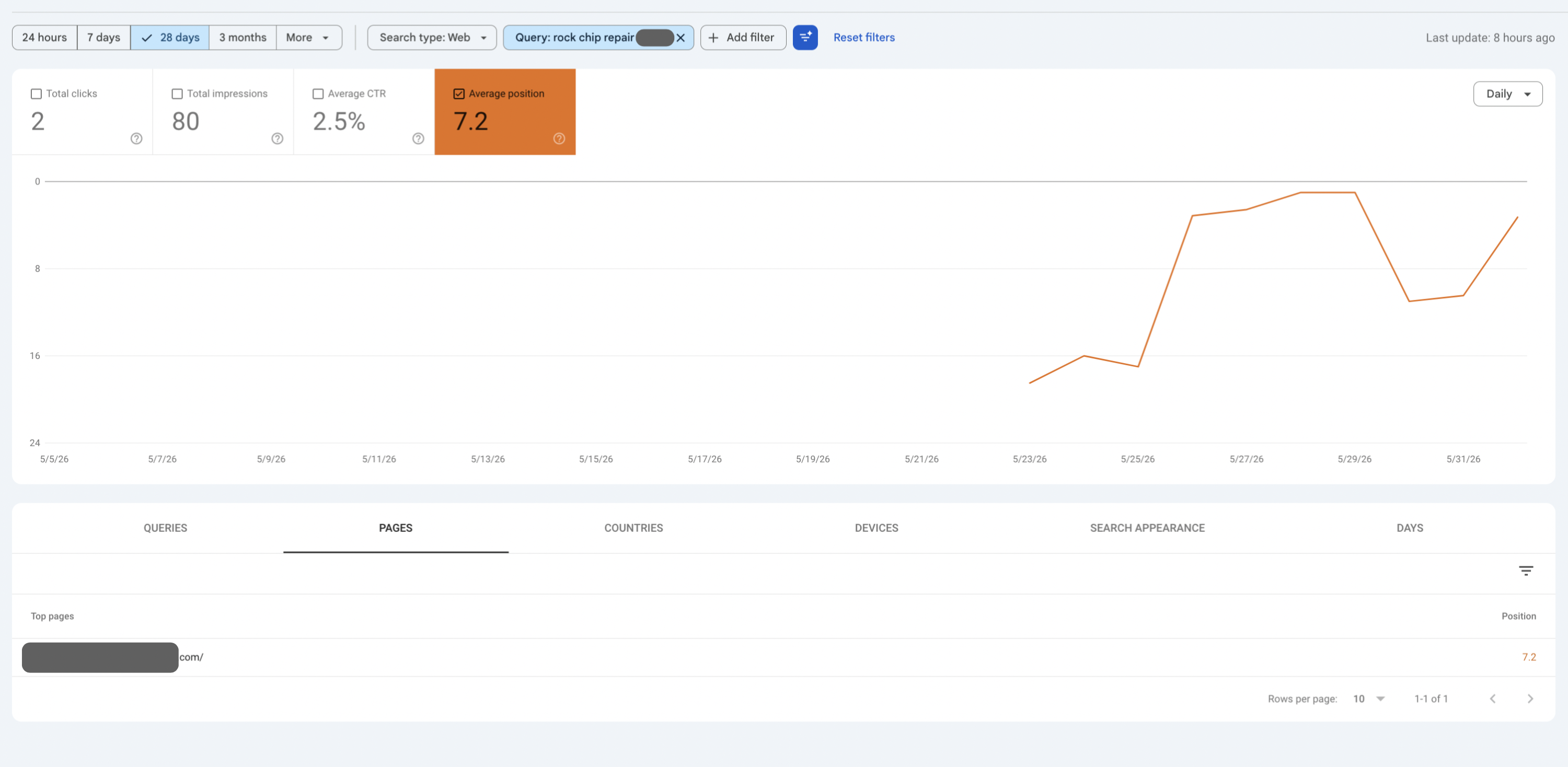
I started all of this at the beginning of May. I believe the first links I built for it were on May 6th.
By May 23rd or so we can see the site started appearing for rock chip repair for the first time and quickly rose to position one where it has bounced around a bit.
However, the most surprising part of this was seeing it appear in the AIO, which really has no reason to deliver the website instead of the Facebook page other than the fact that I built a bunch of links about rock chip repair.
![Screenshot showing the website ranking in an AI Overview for Rock Chip repair in [city]](/images/screenshot-2026-06-06-at-45832-pm.png)
Worth noting that with Google, the company’s Facebook page usually ranks somewhere between 1 and 3 for “rock chip repair [city]” and the website currently appears somewhere below the Facebook page the majority of the time for the organic results for most queries. The site was previously usually around 3-4 for the brand name before I built these new links but lately it’s been #1 every time I’ve checked. The facebook page also ranks for a lot of window related terms that the website doesn’t appear for (again the website doesn’t mention these anywhere and the facebook page does. Also it’s Facebook.)
At the time of this writing the site is sitting at 8 in the organic results in addition to the AIO.
![Screenshot of fatrank browser extension showing the website ranking position 8 for the rock chip repair [city] search term.](/images/screenshot-2026-06-06-at-50606-pm.png)
However, on Bing the website is the only page associated with this business that ranks for this term, which is actually one of the more interesting takeaways for me. That means it’s appearing on bing for this term exclusively because of these backlinks/anchor texts. In my opinion.
Conclusions
So what’s the lesson here?
Honestly, I don’t know if there is one. We know links work. We know anchor text is important.
But I wanted to see how I could get things to move for a term that isn’t mentioned in the content anywhere.
I actually had no intention of testing the AIO specifically. In fact, the AIO only shows up for me for this term about 30% of the time and google does seem to be testing whether to return the fb profile or the website.
Though it does appear in the AIO often enough for Ahrefs to notice it at least.

How do I know this didn’t happen simply because the links were giving the site more authority and Google already correlates the brand for these terms? Or that the links simply allowed it to be crawled more often. Or anything else?
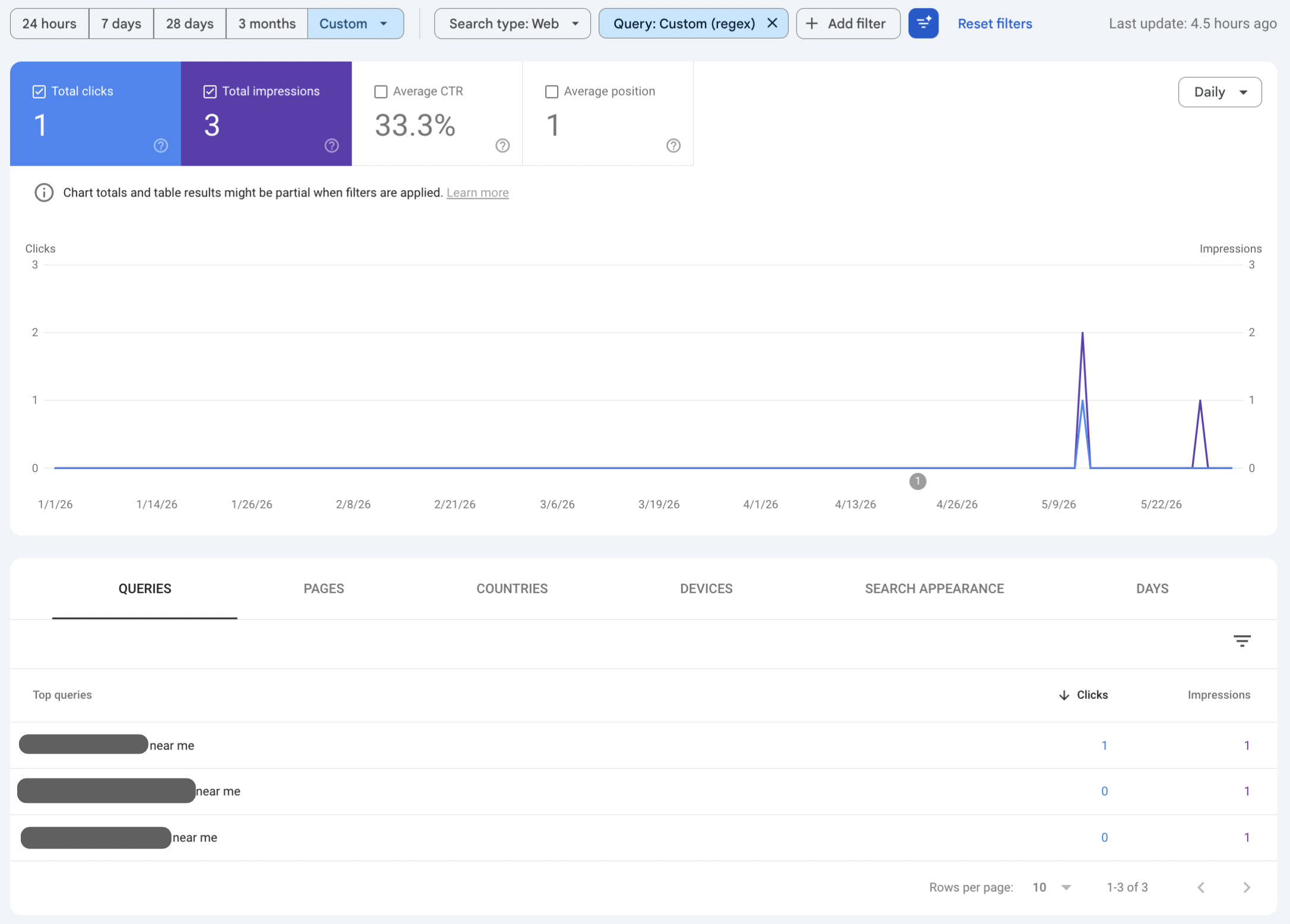
The truth is I don’t. Other than the fact that the site doesn’t really appear in the same way for other similar terms (it’s been bouncing around page 4 -6 for a couple of other similar but unrelated terms* that were mentioned frequently in the directory listing descriptions) and the timing of this starting to happen a week or two after the initial links were built. I’ve had the site live for about 6 months before doing this and it never appeared for these terms before.
*And here we can see that shortly after these links were built the site got a couple lonely impressions for these terms. My guess is the site has very little staying power due to being so barebones so it probably showed for one person and then never again. Yeah it’s almost no traffic (I would prefer if zero users ever actually land on the site in it’s current state honestly) but I’m sure the links have nothing to do with this:
Still, I think an honest linkbuilder will say “it could be a lot of things helping to drive this, but I know my work didn’t stop it from happening” and that goes for just about anything we do.
There are so many different factors at play especially regarding off-site SEO that it often doesn’t feel right to me to claim with 100% certainty that this did that, even if I know that if I want that to happen I should do this.
And I know the main critique of this already: that’s an insanely uncompetitive term, try doing the same in Los Angeles.
Yeah, no shit, in order to examine something in isolation you need to be able to isolate it.
Is this going to work in every vertical for every competitive term? Probably not. But then again, if you’re a good SEO you should be able to find some instances where you’ll be able to do something similar even in much more competitive arenas. Although, yeah, if you have a real brand and can build enough relevant links you probably can succeed at something like this.
But to me the point isn’t that we should make a strategy out of doing things like this, or that it’s a good use of time (because it probably isn’t in most cases) but instead I think a more important takeaway is that even in [current-year], with all of our constant algorithm updates and AI and everything else that seems to never stop changing, it’s still in no small part… backlinks and keywords. The same as it ever was.